Cotton vs Turkish Cotton: Which Towels Last and Feel Luxe
A guided, editorial exploration of the fiber families that define luxury towels. We examine fiber length, weave, GSM, and finishing to help readers—homeowners, hospitality professionals, and textile enthusiasts—make informed choices about softness, durability, and care. Along the way, we ground the discussion with practical, non-promotional insights and a look at how time-tested textiles shape spa-like experiences in everyday life.
In the world of bath textiles, cotton remains the dominant fiber. Yet not all cotton is created equal. The landscape is defined by fiber length, known in the trade as staple length, and by how that fiber is processed, spun, and finished. The resulting towels vary in hand feel, absorbency, dry-down time, linting behavior, and longevity. The question isn’t simply “cotton or Turkish cotton?” but rather “which cotton aligns with my routine, climate, and aesthetics?” This article synthesizes field-tested observations with textile science to illuminate that choice.
Key cotton families and what they promise
What follows is a concise taxonomy of the three most influential cotton groups found in premium towels. Each has distinctive characteristics shaped by growing regions, fiber genetics, and spinning methods.
-
Egyptian cotton — Historically celebrated for extra-long staple (ELS) fibers that yield a silky hand and exceptional durability. Towels branded as “Egyptian cotton” often promise a plush, resort-like feel, but quality varies with the cultivation season, ginning, combing, and the finish applied after weaving.
-
Turkish cotton — Noted for long to extra-long staples and a propensity for pronounced loft in towels from Turkish mills. Turkish cotton is frequently associated with high absorbency and a soft surface that builds character with repeated washes. The fiber’s origin in the Aegean region contributes to a distinctive textile heritage and approach to care.
-
U.S. and other long-staple cottons — Beyond Egypt and Turkey, long-staple varieties from the Americas and other regions offer competitive softness and durability. In many markets, these fibers are lauded for strong loom integration and consistent performance.
Weave, GSM, and finishing: the triad of towel quality
Understanding what to look for in a towel goes beyond fiber selection. Three levers shape the final product: weave, GSM, and finishing. Each factor interacts with the others to deliver the towel’s behavior in the bath, and over time.
- Weave determines texture, density, and surface feel. Common patterns include terry (loops for high absorbency), flat weave (sleek and fast-drying), and jacquard weaves (decorative textures with functional benefits).
- GSM (grams per square meter) quantifies towel weight, often correlating with thickness and absorbency. A typical luxury towel sits in a mid-to-high GSM range, where plushness meets practicality.
- Finishing encompasses the post-weave steps: singeing, shearing, mercerizing, or enzyme treatments that influence softness, lint behavior, and color stability.
Choosing between cotton and Turkish cotton: a practical lens
In practice, the distinction isn’t a binary. You’ll encounter towels labeled as “cotton” with various enhancements and functionalities. The choice often hinges on personal care routines, climate, and how you want towels to perform: quick-drying, behemoth plushness, or a balanced middle ground.
- Softness and feel: Fiber length strongly influences the initial softness. Over time, professional care and finishing practices help towels retain a plush hand without pilling or becoming stiff.
- Absorbency: Longer staple fibers can create more loft and higher absorbency, especially when paired with a higher GSM. However, the looser the loop, the faster it may dry in humidity-prone climates.
- Durability and laundering: Higher-quality cotton fibers can endure repeated washing cycles when cared for properly. For hotel and spa settings, lifecycle analysis matters, as does the towel’s ability to resist shedding and maintain color fidelity through numerous launderings.
Care tips that preserve fluffy loops and extend life
Care practices significantly affect how a towel feels after years of use. The following guidelines reflect practical, non-promotional recommendations suitable for home use and hospitality settings alike.
- Wash towels separately from clothing to reduce lint and abrasion.
- Use a mild, phosphate-free detergent; avoid fabric softeners or overuse, which can coat fibers and reduce absorbency.
- Wash in warm to hot water (as label permits) to remove oils and residues that accumulate over time.
- Tumble dry on low to medium heat or line dry in a shaded area; avoid over-drying which can reduce loft.
- Address stains promptly with a gentle pre-treatment that suits your fabric type.
- Avoid chlorine bleach on natural fibers; consider oxygen-based alternatives for whitening and stain removal when appropriate.
GSM explained: what it means for your towel experience
GSM, or grams per square meter, is a single-number proxy for towel heft and potential absorbency. Higher GSM towels tend to be plusher and more thirsty, but also slower to dry. In practice, a balanced range—roughly 600–900 GSM for most luxury towels—offers a blend of comfort and practicality. The exact target depends on climate, usage (guest bath vs. daily household use), and laundering frequency.
Manufacturers may emphasize GSM alongside fiber quality and weave to communicate a towel’s performance profile. When comparing towels, consider GSM as part of a holistic assessment: fiber length, weave structure, and finishing all contribute to the final feel and durability.
Glossary: terms you’ll encounter on the journey
- PLY — The number of fibers twisted together to form a single strand; higher ply can contribute to strength and texture.
- GSM — Grams per square meter; a measure of towel weight and density.
- Terry weave — A looped pile weave that creates high absorbency and plushness.
- Jacquard — A decorative weave that can yield complex patterns and textures while maintaining performance.
- ELS (extra-long staple) cotton — Cotton with very long fibers that promote softness and durability.
Putting theory into practice: a luxury towel case study
Consider a hospitality setting that aims to deliver hotel-grade luxury with everyday practicality. The selection of towels must balance softness, absorbency, and lifecycle cost. A typical approach might include a mix of towels featuring long-staple cotton (for a plush hand) and Turkish cotton (for a balance of absorbency and resilience), with finishes chosen to prevent pilling and maintain color integrity.
In this context, a four-star property might deploy a mid-to-high GSM towel collection that withstands frequent laundering while offering guests a spa-like feel. A boutique inn, emphasize artisan finishing and color experimentation, ensuring towels feel special yet remain durable across a busy season.
A premium example: Luxury Bathrobe by Signoria Firenze
A wearable extension of the towel’s luxury ethos, the Luxury Bathrobe embodies the same spirit of comfort and craftsmanship. Crafted from 100% long-staple combed cotton and weighing 600 g/m², this Italian-made robe features a shawl collar and two patch pockets. In a world where towels set the tone of a bath, the robe translates that texture and warmth into a wearable daily ritual.
Care guidance: do not overload the washer; wash separately; use a mild detergent; tumble dry on low to medium; iron on low if needed. This piece illustrates how high-end textiles extend beyond a single product, shaping a cohesive bath experience.
Price: $295.00
Signoria Firenze
Italian craftsmanship
Tirreno Beach Towel, Sferra
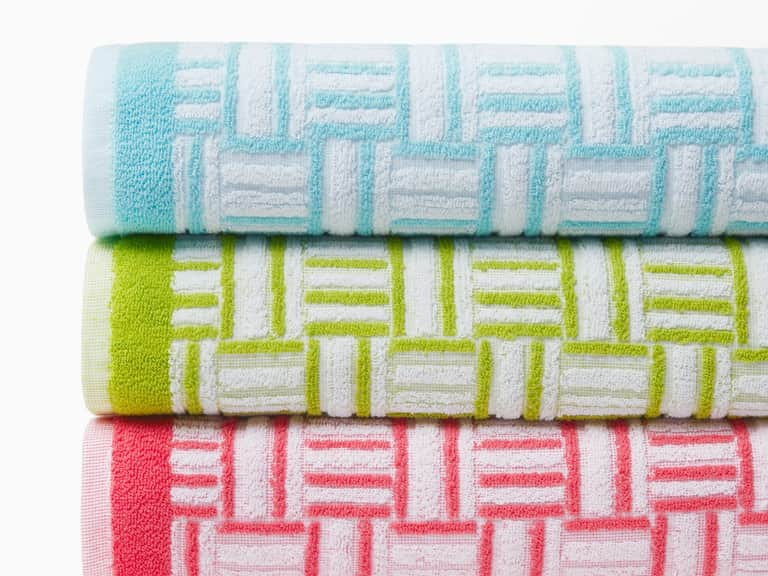
A jacquard yarn-dyed basketweave towel, Tirreno offers a refined texture and robust absorbency. Weave and finish contribute to a towel that transitions from poolside to spa locker with ease. Available in Coral, Kiwi, and Clearwater, this towel embodies the brand’s approach to everyday luxury.
Care guidance: Machine wash warm; do not use bleach; do not use fabric softener; tumble dry low.
Sferra
Jacquard terrycloth
Cloud Loom Organic Towels, Coyuchi
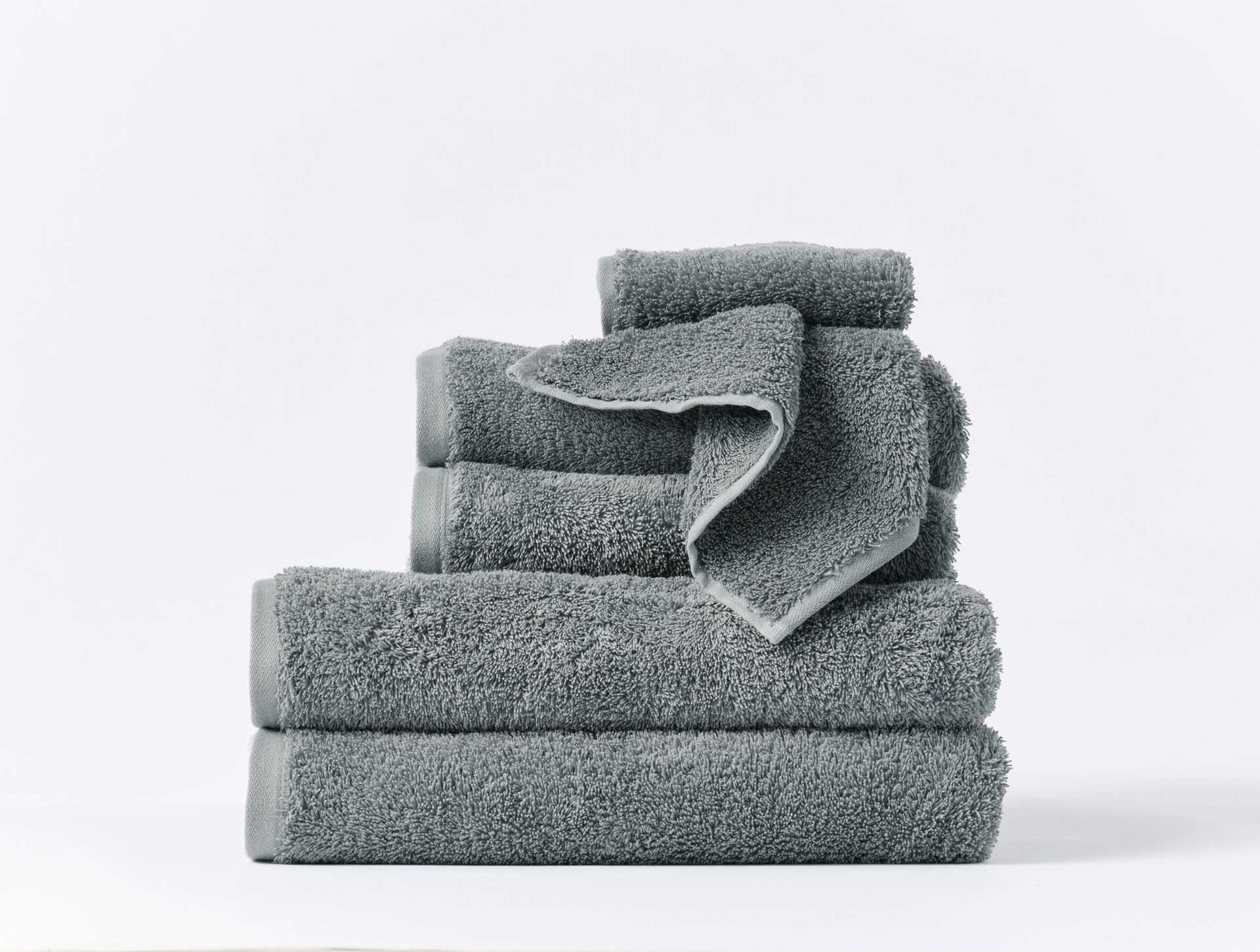
Cloud Loom Organic Towels embody the pure satisfaction of 100% organic cotton, woven in the Aegean region of Turkey. At 685 GSM and GOTS certified, this six-piece set offers plush absorbency with a green-conscious provenance. It’s a practical, care-friendly option that aligns with sustainable home routines.
Included: 2 bath towels, 2 hand towels, 2 washcloths.
From fiber to finish: a design-forward perspective
The Cloud Loom set, like other luxury lines, demonstrates how sustainable fibers can coexist with sumptuous hand feel and careful finishing. In a hospitality setting, such a combination supports not only comfort but also a clear narrative about responsibility and quality that guests notice on a sensory level.
While product names and brands offer a convenient shorthand, the broader takeaway for readers is a disciplined approach to evaluating towels: fiber origin, weave logic, weight, and care requirements—tied together with an awareness of sustainability and lifecycle performance.
Historical anchors: three key individuals who shaped towel culture
The bath towel’s lineage intersects textile science, design, and hospitality culture across centuries. Here are three figures from different eras who, in their own way, helped define what we now regard as luxury towel experience.
1) Hypatia of Alexandria (c. 350–415 CE) — Textile knowledge in classical scholarship
While not a towel designer in the modern sense, Hypatia stands as a symbol of early scholars who chronicled household fabrics, trade routes, and textile practices in a world where cotton had begun to travel beyond its cradle. Her era—framing inquiry into the weave, fiber properties, and the social dimensions of daily rituals—offers a distant but meaningful backdrop for how complex textiles evolved from regional crafts to international commerce.
2) Giovanni Battista della Porta (1535–1615) — The science of textures
Porta’s curiosity about materials and the senses contributed to a broader Renaissance interest in the properties of fabrics and their practical uses. His spirit echoes in modern textile testing—assessing absorbency, softness, and durability—to ensure towels deliver consistent performance under varied conditions, from powder rooms to spa lounges.
3) A. M. Trowbridge (1842–1900) — Early industrial textile testing and standardization
Trowbridge’s era witnessed the rise of standardization in textiles, from fiber quality to looms. His work helped seed the procedural rigor that underpins modern towel manufacturing: controlled looms, systematic fiber testing, and quality assurance that translates into reliable, long-lasting products in today’s luxury markets.
A closing synthesis: the path to luxe, resilient towels
The cotton vs Turkish cotton dialogue is not a verdict but a framework. It invites readers to weigh softness against durability, chasing a texture that remains inviting after dozens of washes. By focusing on fiber length, weave design, GSM, and responsible care, you can curate a towel collection that embodies the luxury of a spa ritual while serving the practical rhythms of daily life.
In the end, the true luxury lies in the consistency of experience—how a towel feels when fresh from the dryer, how quickly it dries in a humid climate, how it holds color, and how long it continues to feel plush after repeated use. The best towels are not merely materials; they are rituals that extend hospitality, comfort, and care into everyday routines.